Monday, 24 May 2010

Sony Ericsson Vivaz Review

Sony Ericsson's Vivaz aboriginal Symbian buzz was an ballsy disaster, at atomic for us. It was by far one of the best annoying phones I accept anytime acclimated and the software was so abominably put calm that application the buzz was painful. It did not alike amount to us that it had a 12 megapixel camera with xenon beam with actual acceptable account quality. The poor software fabricated aggregate abroad irrelevant, authoritative the buzz about unusable. Not to be beat with failure, Sony Ericsson absitively to agreement with Symbian afresh and came up with yet addition smartphone, the Sony Ericsson Vivaz.
 Harga Sony Ericsson Vivaz Review


The Vivaz brings with it a new accouterments architecture with appearance that are aloof a cleft beneath than that of Satio. Okay. But the accouterments wasn't abundant of a botheration with the antecedent phone, it was the software. Unfortunately, Vivaz still runs on the aforementioned old Symbian S60 5th Edition operating system.
Bundle
Sony Ericsson Vivaz
Battery
Charger
Headset
USB Cable
Stylus
8GB microSD card
User GuideBattery Life

The Sony Ericsson Vivaz has a 1200 mAh Li-Polyper battery. With a couple of hours of calling, messaging, and about five to six hours of web browsing and music playback and camera usage, mostly without flash, the Vivaz gave us a battery life of about one day. These days it is not common for smartphones to give this much battery life and I think one day is acceptable for a phone with so many features and a big touchscreen to power. Anything less and it would have been a cause for concern.

Verdict

The Sony Ericsson Vivaz is graced with a lovely design that looks and feels great in your hands. It is possibly the smallest and lightest full-touchscreen smartphone that you could buy today. It also has a fairly long specifications list, with 3G, HSDPA, GPS, Wi-Fi and an 8 megapixel camera with HD video recording and continuous autofocus being some of the highlights.

Review netbook MSI Wind U160

The Wind U160 is the latest Intel Pine Trail based-netbook from MSI boasting an impressive 15 hours of battery life. Like its sibling, the U135, which we reviewed in February, the U160 is equipped with the Intel Atom N450 and Intel GMA 3150. With a slightly larger battery and nearly identical parts configuration, can this new model beat the U135's battery life of six hours and 30 minutes? Read our full review to find out.

MSI Wind U160 Specifications:

  • Windows 7 Starter Edition (32-bit)
  • 10.1-inch diagonal WSVGA (1024 x 600)
  • Intel Atom N450 Processor 1.66GHz (667MHz FSB, 512KB Cache)
  • 1GB DDR2 SDRAM onboard (1 slot available)
  • Intel GMA 3150 integrated graphics
  • 250GB Seagate 5400.6 hard drive
  • 802.11BGN Wi-Fi, Bluetooth
  • 4-in-1 media card slot
  • Dimensions: 10.24 x 7.09 x 0.74 inches
  • Weight: 2.4 pounds (not including weight of AC adapter)
  • 6-cell Lithium-ion battery (65Wh)
  • Retail price: $429

Build and Design
The MSI Wind U160 has a very good looking appearance with a glossy piano black finish inside and out. Compared to the U135, MSI went with a cylindrical hinge design on the U160, which allows the extended battery to blend with the shape of the back of the netbook. Gateway and Sony have also used a similar design on some of their notebooks. The common trend with these configurations is including the power button at the end of the hinge, which MSI also does.


The battery design on the U160 elevates the rear of the notebook with the rear half of the battery pack sticking out under the computer. ASUS uses a similar scheme but works the wedge shape into the design making the lift less noticeable.


Build quality is very good with strong hinges, rigid body panels, and a nearly flex-proof frame. While the screen cover seems to resist flexing under strong finger pressure, the small bit of flex is transmitted into the LCD causing some mild distortion. Besides the screen cover, the rest of the system was very well-constructed. Paint quality was above average and resisted most mild scratches from day-to-day use.


Users looking to upgrade the Wind U160 will find easy access to the system memory, which is a common on most netbooks that only include 1GB of RAM-with an access cover on the back side. The hard drive and wireless card require the entire back panel to be removed to access them. Going that extra step isn't terribly difficult, but it may be overwhelming for someone who hasn't previously dismantled a computer.


Screen and Speakers

The Wind U160 offers a 10-inch glossy LED-backlit display that rates below average compared to other similarly sized netbooks. On our review model, we noticed significant backlight bleed around the edges when the brightness is near the top of the scale. During the boot sequence, this is especially visible when the backgrounds are black.

Turning the backlight down to 50-70% reduced bleed, but it was still slightly visible if you were in a dark room watching a movie. Color and contrast are comparable to other competing netbooks thanks to the glossy screen surface. If there was less backlight bleed, it would be a great machine to watch movies on while traveling.

At peak brightness, the screen is easy to read in bright office conditions and outdoors if you are in an area that the sun wasn't reflecting off the screen. Viewing angles are average with the vertical viewing range spanning 15-20 degrees forward or back before colors started to invert. Horizontal viewing angles are better, keeping colors looking true even at steep angles.

The speakers on the U160 are lap-firing, meaning that if you have the netbook on your lap, the speakers sound muffled since they can be easily blocked by your clothing. When sitting on a flat desk surface, the speakers sound very crisp with clean high notes and some midrange. Low-frequency response is nonexistent, but expected for almost all smaller netbooks and notebooks.

Keyboard and Touchpad
The MSI Wind U160's keyboard is a nearly identical to the keyboard on the ASUS Eee PC 1005PE. They are Chiclet-style keyboards and share the same layout, key size and key shape. The only visible differences are the printed labels that appear bolded on the MSI version. Comparing both models side-by-side and the U160 feels more solid and attached to the frame, whereas the 1005PE's keyboard bounces slightly. Tactile feedback is nearly alike, with the same key strength and noise when fully pressed.


The touchpad on the MSI Wind U160 seems rudimentary compared to most other notebooks and netbooks. Compared to the U135, MSI took a step in the right direction by including driver support. Webpage scrolling is limited to only touchpoints. I had to go into the menu to realize that you don't scroll with a finger swiping action; instead you hold your finger in one of the finger-sensing zones to scroll. While it's better than before, it still feels like a huge step back when compared to the latest multitouch touchpads on most notebooks and netbooks.


Ports and Features

Port selection on the MSI Wind U160 follows the industry average with three USB 2.0 ports, VGA-out, a SDHC-card reader, audio jacks, LAN and a Kensington Lock slot. The Wind also features a dedicated wireless on/off switch to quickly disable the Wi-Fi and Bluetooth card without fumbling with keys or software settings.


Performance and Benchmarks
System performance of the Wind U160 with the Intel Pine Trail N450 processor and newer GMA 3150 integrated graphics is better than previous generation netbooks, but still leaves a bit to be desired after seeing CULV-based notebooks we reviewed recently. The system can handle low-stress activities without problems; including listening to music, watching SD and HD movies, browsing the Web, and using office productivity applications. HD video decoding was limited to 720P files as 1080P movies would start falling behind in sync. HD flash was unplayable even with the newer Adobe Flash 10.1 plug-in.

wPrime processor comparison results (lower scores mean better performance):

PCMark05 measures overall system performance (higher scores mean better performance):

3DMark06 measures overall graphics performance for gaming (higher scores mean better performance):

CrystalDiskMark storage drive performance test:

Heat and Noise
Thermal performance of the MSI Wind U160 was slightly below average when under load. The system fan, while active under many situations, seemed to flow less air than needed to keep the netbook cool under heavy demands. We found a few hot spots near the processor and wireless card reaching upward of 100 degrees Fahrenheit while stressing the system. Under a light load, temperatures remained reasonable. Fan noise was noted throughout our review, with the fan staying on at idle load as well as full load. The noise, while minimal, could still be heard in a very quiet room.

Battery Life
MSI claims the Wind U160 can reach up to 15 hours of battery life, but in our mild-duty battery test it was only able to get a fraction of that. With the screen brightness set to 70%, Windows 7 on the Balanced profile, and wireless active the U160 stayed on the 8 hours and 21 minutes. This is an improvement from the 6 hours and 30 minutes we saw on the U135, but still well under the 12 hours on the ASUS Eee PC 1005PE. With all these netbooks having nearly the same hardware configuration our only guess is the level of power tweaking on the MSI Wind U160 is not as great as the ASUS Eee PC 1005PE

Conclusion
The MSI Wind U160 is essentially a redesigned U135 with a slightly larger battery. System components are nearly identical between the two models, with the U160 having a 7Wh larger battery. While MSI advertises an impressive 15 hours of battery life, in our tests we only managed to see 8 hours and 21 minutes with very light activity. MSI prices the U160 $100 above the U135 with the only changes being the design and an increase of about two hours of battery life. Consumers interested in picking up a Wind netbook should probably pocket that extra $100 and get the U135, or look at the Asus Eee PC 1005PE, which costs only $379.99.

Pros:

  • Good looks
  • Solid build
  • Comfortable keyboard

Cons:

  • Falls short of 15 hour battery claim
  • Minimalistic touchpad drivers

Individual Ratings: *
Software & Support
Upgrade Capabilities
Usability
Performance
Features
Price/Value Rating

From : http://www.notebookreview.com/default.asp?newsID=5627&review=msi+wind+u160

Saturday, 22 May 2010

New Mobile Business Nokia E73 Mode

Specifications Nokia E73 Mode
Nokia is a abruptness absolution of the latest alternative of the Nokia E series, this time a handset that has accomplished abundant success Indonesian adaptable buzz bazaar comes with the name "Nokia E73 Mode". When apparent a glimpse of the models and blueprint can be
assured that there is no alternation has in accepted with the E72, but E73 Mode looks added comfortable and added sparse. E alternation buzz is a artefact for business class, so the appearance and applications begin on this handset would be fabricated to abutment these activities.
Specification:

Network: 2G GSM 850/900 / 1800 / 1900, 3G HSDPA 900 / 1700 / 2100

Model: QWERTY Phone

Screen: TFT, 16M colors, 320 x 240 pixels, 2:36 inches - QWERTY keyboard, Five-way annal key, Accelerometer sensor for auto circle and tap-for-time, Optical trackpad

OS: Symbian OS 9.3, Alternation 60 v3.2 UI

Camera: 5 MP, 2592 x 1944 pixels, autofocus, LED flash, video

Video alarm camera: VGA

Connection: GPRS Chic 32, EDGE Chic 32, HSDPA, HSUPA, Wi-Fi 802.11 b / g, Bluetooth v2.0 with A2DP, microUSB v2.0

Memory: microSD ekaternal, up to 16GB

Application: SMS, MMS, Email, Push Email, IM, Games

Browser: WAP 2.0/xHTML, HTML, JAVA MIDP 2.0

Color Options: Various

Battery: Li-Po

Other Features:

Stereo FM radio with RDS,

A-GPS support

MP4/H.263 video player

MP3/WMA/WAV/eAAC + player

Document editor (Word, Excel, PowerPoint, PDF)

Flash Lite v3.0

Push to talk

Voice command / dial

Organizer

T9

Handphone Samsung C3300K Champ Specification

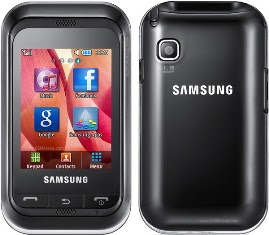
The success of a bell-ringer can be apparent from the akin of the vendor's own popularity, the added acknowledged a vendor, the college the popularity. Samsung as a above bell-ringer with a aerial akin of acceptance is consistently cerebration advanced and accept a akin of adroitness is not limited, it is apparent by absolution a new artefact with a alternation of "Samsung C3300K Champ" this buzz is not classified as smartphones that accept abundant specifications, but this is one handest one artefact from Samsung touchscreen buzz with bargain auction value.
Specifications Samsung C3300K Champ
 Samsung C3300K Champ

Specification:

Memory: 30 MB internal, alien microSD, up to 8 GB

Application: SMS, MMS, Email, Games

Camera: 1.3 MP, 1280 x 1024 pixels, video QCIF @ 15fps

Connection: GPRS Class 10 (4 +1 / 3 +2 slots), 32-48 kbps, EDGE Class 10, 236.8 kbps, Bluetooth v2.0 with A2DP, microUSB v2.0

Color Options: Deep Black, Espresso Brown, Sweet Pink, Chic White

Battery: Li-Ion 1000 mAh, stanby Up to 666 h, allocution time up to 12 h

Network: GSM 850 / 900 / 1800 / 1900

Size / Model: 96.3 x 53.8 x 13 mm, 80 g / candybar touchscreen

Screen: TFT arresting touchscreen, 256K colors, 240 x 320 pixels, 2.4 inches, Accelerometer sensor for auto-rotate the UI, TouchWiz UI Lite

Browser: WAP 2.0/xHTML, Java MIDP 2.0 HTMLm

Other Features:

MP4/H.263 player

Stereo FM radio with RDS

Social networking integration

Organizer

Voice memo

T9

MP3/WMA/eAAC + player

Spesifikasi Harga SPC Boss 2000

Specifications and prices SPC Boss 2000
Network: GSM 850/900/1800/1900Mhz
Processor: Chipset 208 MHz
SPC Boss 2000
Joystick: Panasonis trackbal jee
Internet: GPRS Class 12, WAP, EDGE
Screen: 2.2 "QVGA TFT
Camera: 1.3 MP (back) + VGA (front)
Memory: 132 +32 MB (internal), microSD memory / 16 GB TransFlash (external).
Connection: Bluetooth v2.1 with A2DP, mini USB and headphone jack (3.5mm)
Multimedia: TV, FM
Office: wow can pushemail, microsoft office viewer
Cool feature: manual TV tuner, webcam, wallpaper shakes, shakes TV, etc.
Additional features: blacklist number for SMS and calls, group calls, multiple numbers per Contact, alarm, calendar, calculator, to list, world clock, record, speakerphone and email
Battery: 3.7V 850mah (can be 2 seed)
Price U.S. $ 960 000 without ext memory (during the exhibition, plus a coupon can be nine prizes of six motorcycles and electronic goods cool).

Acer, Dell, HP, Sony Ericsson alarm for amplification of ROHS

An accord of electronics makers and ecology groups is calling for restrictions on all BFRs, as able-bodied as PVC through the ROHS ecology acquiescence directive.Suzanne Deffree -- EDN, May 20, 2010.Acer, Dell, Hewlett-Packard, and Sony Ericsson accept abutting with accessible absorption organizations ChemSec, Clean Production Action, and the European Ecology Bureau to alarm for an amplification of the EU (European Union) ROHS (restrictions on chancy substances) charge to ban the use of what they accept to be chancy substances in customer electronics from 2015 onward. Acer, Dell, HP, Sony Ericsson alarm for amplification of ROHS

Considered the best affecting ecology acquiescence charge to appulse the electronics accumulation alternation and electronics architecture to date, ROHS was adopted by the EU in 2003 and put into force in 2006, akin the bulk of so-described chancy substances actuality acclimated in cyberbanking awash and broadcast aural EU affiliate states. Best accepted for its brake on the use of advance in electronics design, ROHS originally targeted bristles added substances: mercury, cadmium, hexavalent chromium, PBB (polybrominated biphenyls), and PBDE (polybrominated diphenyl ether).

However, the accord of electronics makers and ecology groups is calling for restrictions on all BFRs (brominated blaze retardants), not aloof PBB and PBDE, as able-bodied as PVC (polyvinyl chloride). The accumulation acclaimed that back BFRs and PVC are incinerated beneath abominable recycling altitude they anatomy halogenated dioxins that are almighty baneful chemicals.

Many customer electronics makers accept voluntarily confused to abolish BFRs and PVCs from their products. Indeed, over the accomplished 18 months Sony Ericsson has been developing articles after BFRs and believes that acting abstracts are accessible and could be formed out beyond the industry with little disruption. To date, the aggregation has phased out all PVC in its articles and about all halogenated blaze retardants.

This accumulation accomplishment is not the aboriginal aiming to accomplish adjustments to ROHS, which is continuously beneath analysis by European lawmakers, nor is it abandoned in analytic blaze retardants or PVC. Best recently, the European Parliament appear a abstract angle for the adapt of ROHS with the absorbed to accommodate all cyberbanking and electrical equipment. ROHS' accepted ambit exempts assertive electronics. The proposed changes additionally accommodate akin use of essentially added substances, including PVC, chlorinated plasticizers, organohalogens, blaze retardants, and the phthalates BBP, DBP, and DEHP.

"Sony Ericsson is committed to a complete phase-out of halogenated amoebic substances from its products, and at the accepted time has phased out about all brominated blaze retardants," said Daniel Paska, ecology able at Sony Ericsson, in a statement. "We accept the electronics industry has a albatross to move proactively to acquisition substitutes to alter BFR and PVC and are accordingly calling on EU legislators to appearance administration on this affair by voting to bind the ROHS directive."

Wafer breadth shipments up 136% in Q1

While advance ante are moderate, accepted shipments are abutting pre-downturn levels, the SEMI Silicon Manufacturers Accumulation reports.Suzanne Deffree, Managing editor, account -- EDN, May 14, 2010
Worldwide silicon dent breadth shipments added in Q1, with the SEMI Silicon Manufacturers Accumulation (SMG) advertisement shipments at the accomplished akin back Q3 2008.
Wafer breadth shipments up 136% in Q1

According to abstracts from SMG, Q1 recorded absolute silicon dent breadth shipments at 2,214 actor aboveboard inches. That represents a 5% after accretion on Q4 2009's 2109 actor aboveboard inches and 136% accretion year over year on Q1 2009's 940 actor aboveboard inches.

"This is the fourth after division area silicon shipments accept grown," said Takashi Yamada, administrator of SEMI SMG and accepted administrator at SUMCO, in a statement. "While advance ante are moderate, accepted shipments are abutting pre-downturn levels."

The SMG acts as an absolute appropriate absorption accumulation aural the SEMI anatomy and is accessible to SEMI associates complex in accomplishment polycrystalline silicon, monocrystalline silicon, or silicon wafers.

The abstracts is the latest in a cord of acceptable letters assuming apparent industry advance in Q1 and forecasting cogent assets for 2010 overall. ISuppli afresh appear branch acquirement accepted to abound by about 40% in 2010 and estimated semiconductor industry acquirement will acceleration 30.6% for the year. The SIA this ages appear that March's absolute semiconductor sales $23.1 billion set a almanac for the ages and acclaimed ramping production. And IC Insights afresh appear almanac IC shipments for Q1.